How to add voyage risk to a supply-chain platform
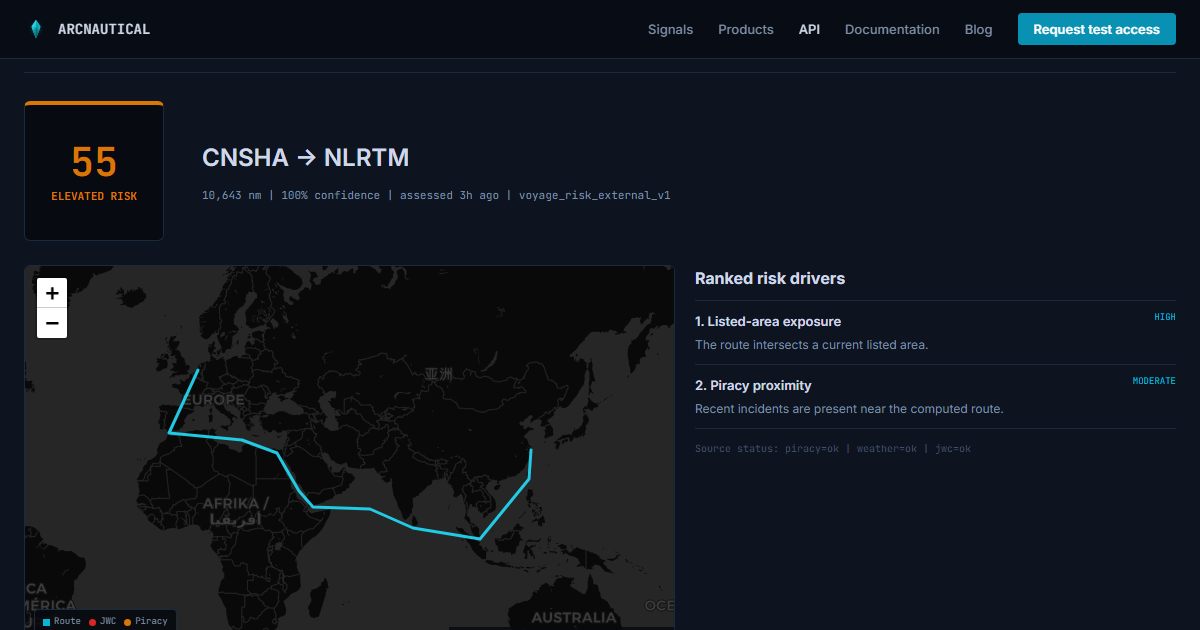
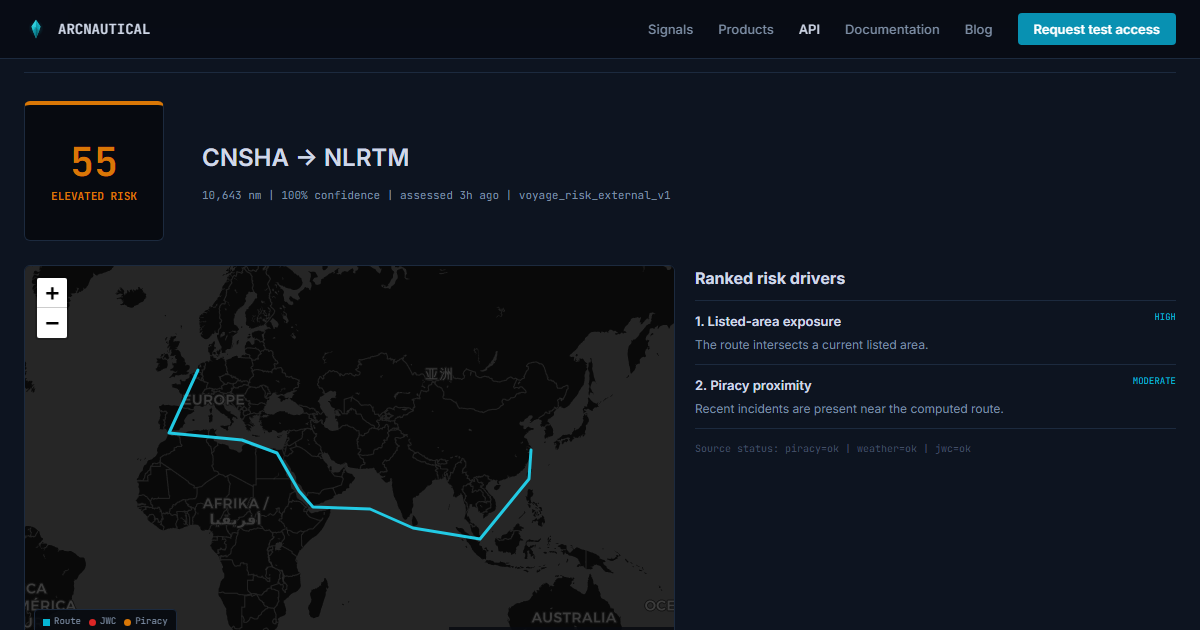
A practical integration guide for adding route-level maritime risk scores, drivers, and confidence to a supply-chain platform.
Maritime intelligence insights, product deep-dives, and the occasional war story from building ArcNautical.
A practical integration guide for adding route-level maritime risk scores, drivers, and confidence to a supply-chain platform.
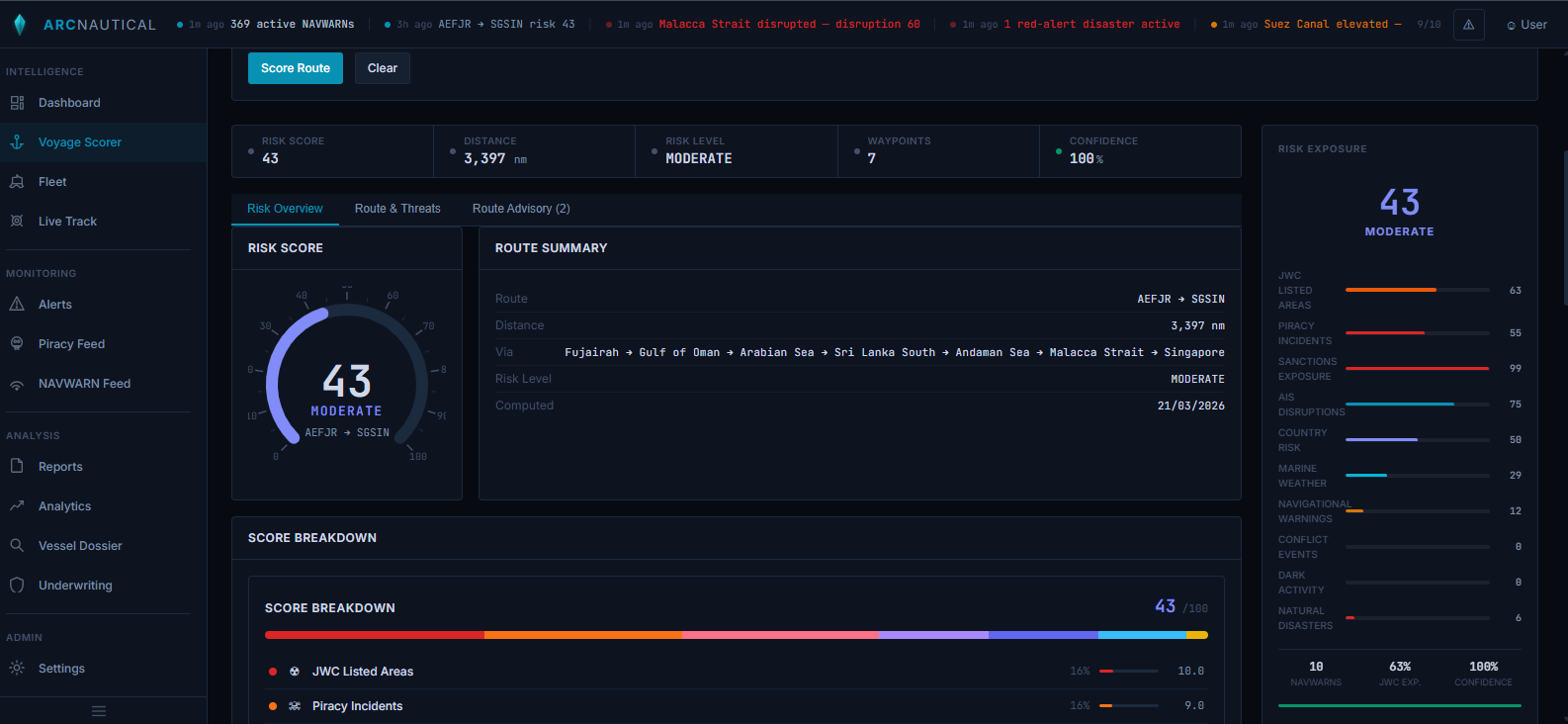
How to use score, confidence, drivers, source status, and assessment time without reducing a voyage-risk response to a misleading traffic light.
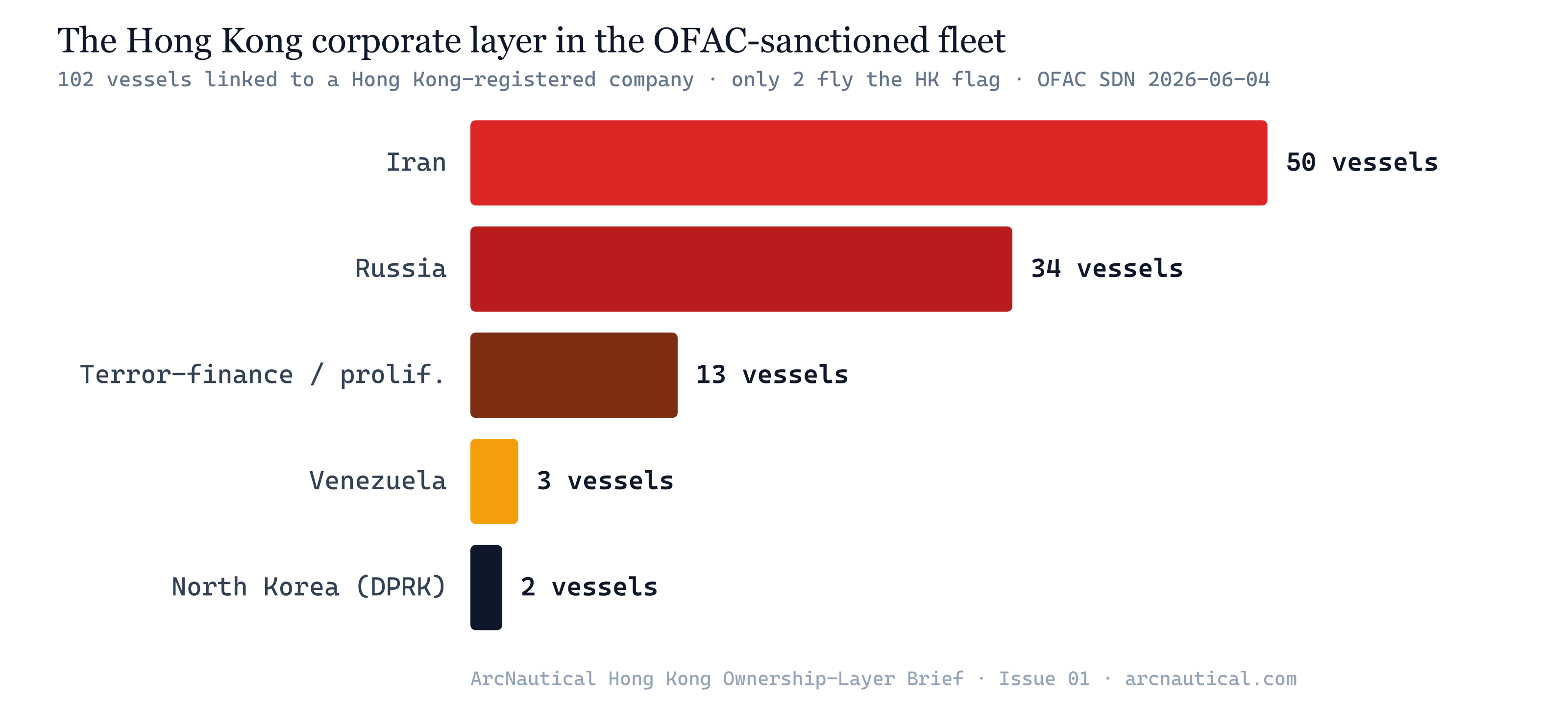
The Hong Kong flag is Paris/Tokyo MoU white-listed and clean. Yet 102 OFAC-sanctioned vessels are linked by OFAC to a Hong Kong-registered company — 72 distinct entities, almost none HK-flagged. The exposure is in the corporate layer, not the flag. Issue 01 of the ArcNautical Hong Kong Ownership-Layer Brief.
Zero dependencies, 42 passing tests, 1,790 real-world routes with 0% land crossing, 510+ port database. The production routing engine that powers our voyage scoring is now free on npm under MIT.
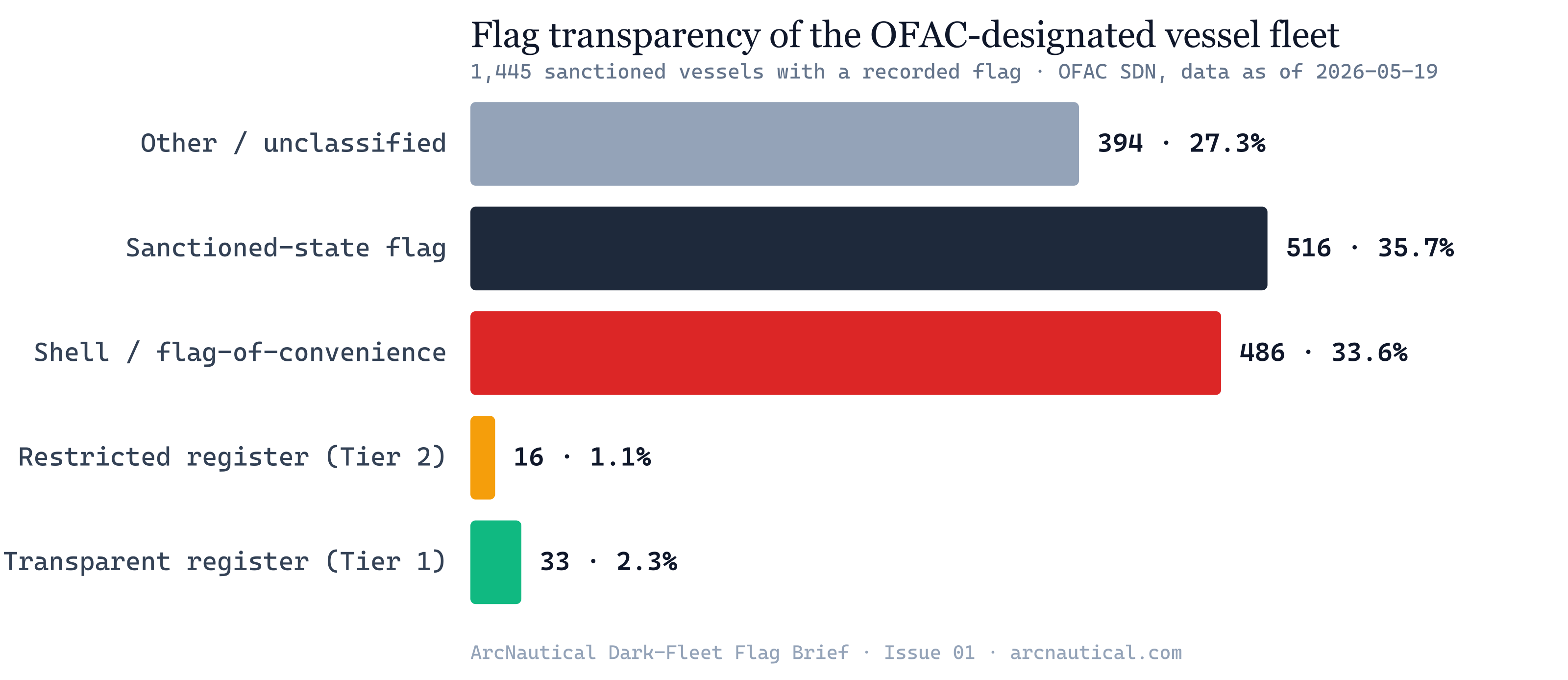
We ran every OFAC-designated vessel through the same flag classifier our dossiers use. Of 1,445 with a recorded flag, only 33 fly a transparent public-register flag. Issue 01 of the ArcNautical Dark-Fleet Flag Brief.
The EU's 20th sanctions package listed Karimun Oil Terminal — the first time Brussels has designated a third-country port for shadow-fleet activity. The compliance implications are larger than the headline.
There's no good open-source maritime routing library in JavaScript. So we built one — A* on an ocean bitmap, 510+ ports, weather-aware ETA. Here's how it works.
Binary vessel sanctions screening only checks vessel names against watchlists. It misses the multi-hop ownership chains that sanctions evaders actually use.
3,200 vessels stranded, 20,000 seafarers trapped, and war risk premiums still catching up. We ran the numbers on the largest chokepoint disruption in modern maritime history.
IMB, ReCAAP, and UKMTO each publish piracy data. Their coverage areas overlap in some places, miss entirely in others, and classify the same incident differently. Here's what that means for anyone pricing risk.
94,000 vessels a year pass through a channel 1.5 nautical miles wide. Our chokepoint monitor currently shows Malacca at disruption 50 — the highest of any strait we track. Here's what the data says.
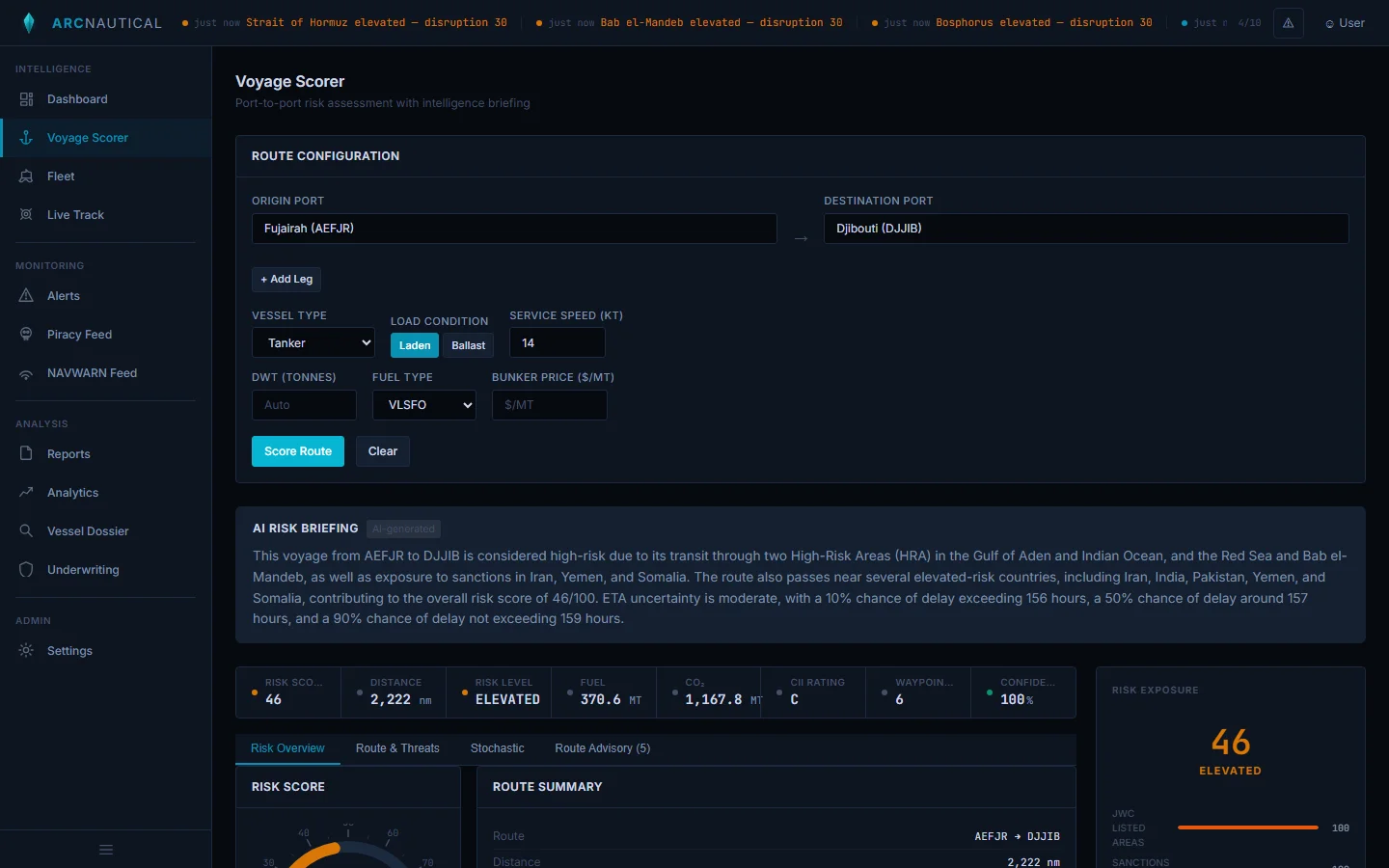
JWC Listed Areas: 100. Sanctions Exposure: 100. Composite risk score: 50. A Fujairah-to-Djibouti tanker run decomposed signal by signal.
The JWC listed area committee meets quarterly. NAVWARNs update every 15 minutes. 369 are active right now. Somewhere between those two cadences, billions in war risk premiums get priced on institutional memory.
A laden tanker on a 2,222nm Fujairah-to-Djibouti run has a 10% chance of arriving 157 hours late. Here's how we know that — and why a single ETA number is always wrong.
The OFAC SDN list has 12,000+ entries. About 400 are vessels. Here's what the data looks like, why fuzzy matching matters, and what most screening tools get wrong.
Five vessels, three active chokepoints on alert, 369 NAVWARNs. Here's how a mid-size fleet operator would actually use ArcNautical from login to first coffee.
Most voyage risk tools are glorified spreadsheets. We wanted something that actually thinks about routes the way an underwriter does — so we built ArcNautical.
We ran every Fujairah-to-Djibouti route variant through 10 intelligence signals. The numbers tell a different story than the headlines.